
Table of Contents
- What does “wine with no added sulfites” mean?
- The Difference Between Added Sulfites and Natural Sulfites
- Sulfites and Headaches: Myth or Reality?
- Wine Sulfite Labeling Regulations: How to Read the Label
- Natural winemaking and microbiological stability without sulfur dioxide
- Storing Sulfite-Free Wines: A Practical Guide for the Cellar and at Home
- Food Pairings for Wines Without Added Sulfites
- Frequently Asked Questions
Last updated: September 23, 2026
What does “wine with no added sulfites” mean?
A wine with no added sulfites is a wine to which no sulfur dioxide (SO2) is added during winemaking, aging, or bottling. The term does not mean “zero sulfites”: endogenous sulfites are still formed as a natural byproduct of yeast metabolism during alcoholic fermentation. Confusion about what “sulfite-free wine” really means almost always stems from a misread label, not from a defect in the wine.
The legal limit of 10 mg/l and what changes on the label
The threshold that triggers the labeling requirement is 10 mg/l of total sulfites. Below this threshold, the label may state “no added sulfites”; above it, European regulations require the statement “contains sulfites.” This is a technical limit, not a judgment of quality, and should be interpreted as such.
EU Regulation on the Labeling of Wine Products
The Difference Between Added Sulfites and Natural Sulfites
Added sulfites are sulfur dioxide introduced by the winemaker as a preservative and antioxidant. Natural sulfites are those produced by the yeast itself during alcoholic fermentation. The difference between added sulfites and natural sulfites lies not in the molecule—which is identical in both cases—but in their origin and quantity.
Why Wine Contains Sulfites: Alcoholic Fermentation and Yeast Metabolism
Sulfites are produced by yeast metabolism as a byproduct of fermentation. This is a fact of winemaking, not a commercial decision. Even the most natural wine, with no additives, contains a certain amount of endogenous sulfur dioxide that rarely falls below 10–20 mg/l.
Sulfites and Headaches: Myth or Reality?
The recurring question is always the same: Is sulfur bad for you? The short answer is that hypersensitivity to sulfites does exist, is well-documented, and affects a minority of wine drinkers, but the classic “wine headache” is rarely caused by SO2. Distinguishing between the two phenomena is the first step toward understanding what’s really happening in your body.
What Does Sulfur Do in the Human Body?
Sulfur dioxide that is inhaled or ingested is largely metabolized by the enzyme sulfite oxidase, which is present in the mucous membranes and the liver. In people with a deficiency of this enzyme—a rare but real condition—SO₂ is not eliminated as efficiently and can trigger respiratory symptoms such as bronchoconstriction, coughing, and wheezing, especially in people with asthma. It is this clinical picture that is recognized as sulfite hypersensitivity, not headaches.
The typical symptoms of sulfite hypersensitivity are:
- Respiratory reactions in people with asthma (bronchospasm, dry cough)
- Hives or itchy skin in sensitive individuals
- Nasal congestion and sneezing immediately after tasting
- Gastrointestinal disturbances in isolated cases
So why does wine give you a headache?
The most likely causes of wine headaches are different, and wine research has identified them with some clarity:
- Ethyl alcohol: It is a vasodilator and a diuretic. The resulting dehydration and cerebral vasodilation are among the most common causes of a hangover.
- Histamines: found primarily in red wines due to malolactic fermentation and aging in wood. Some people have reduced activity of the enzyme diamine oxidase (DAO), which breaks them down.
- Tannins and polyphenols: They may interfere with the release of serotonin and contribute to headaches in susceptible individuals.
- Glycerol and residual sugars: in sweeter wines, they can exacerbate dehydration.
- Eating Speed and an Empty Stomach: Behavioral Factors That Are Often Underestimated.
What Really Changes with a Wine Without Added Sulfites
Those looking for a simpler style may appreciate wines with no added sulfites, which are often made with indigenous yeasts, without aggressive clarification, and with fewer winemaking additives in general.
When to Suspect a True Sensitivity
If respiratory or skin symptoms appear after drinking even small amounts of wine—or consuming other foods preserved with sulfites, such as dried fruit, cured meats, and fruit juices—the proper course of action is to seek an allergy evaluation. Self-diagnosis often leads to unnecessarily avoiding wine when the problem lies elsewhere.
Information on Sulfites and Food Safety
Wine Sulfite Labeling Regulations: How to Read the Label
The regulations governing sulfite labeling on wine labels revolve around a clear rule: if total sulfites exceed 10 mg/l, the statement “contains sulfites” is mandatory. Below that threshold, the producer may indicate that no sulfites have been added. But the rule alone is not enough to understand a label; you also need to refer to the relevant regulations and be familiar with the optional statements.
Regulatory References You Need to Know
The regulations governing sulfites in wine are based on three overlapping levels:
- Regulation (EU) No. 1308/2013 organizes the common market for wine products and establishes authorized oenological practices, including the maximum levels of SO2 by wine category.
- Regulation (EU) No. 1169/2011 establishes the requirement to list allergens on labels, and sulfites in concentrations exceeding 10 mg/L are classified as allergens.
- Regulation (EU) No. 2019/33 supplements Regulation (EU) No. 1308/2013 with specific labeling rules for the wine sector, including optional statements.
Maximum SO2 levels by category
The 10 mg/l limit applies only to the labeling requirement. The maximum permitted levels of total sulfur dioxide are higher and vary by type of wine:
|
Category |
Total SO2 Limit (mg/l) |
|---|---|
|
Red Wines |
150 |
|
White and Rosé Wines |
200 |
|
Sparkling Wines |
185 |
|
Sweet wines (sugar content > 45 g/l) |
300–400 |
|
Organic Wines (Red) |
100 |
|
Organic wines (white and rosé) |
150 |
What to Look for on the Label
When you read a label, look for these items in order of importance:
- The statement “contains sulfites” is required when the level exceeds 10 mg/l. If it is not present, the wine is below the threshold.
- The phrase “no added sulfites” is optional and is not regulated at the European level as an official designation. It is a statement by the producer, not a certification.
- European organic logo (green leaf), indicating compliance with Regulation (EU) 2018/848, with reduced SO2 limits.
- The term “biodynamic” refers to private certifications (Demeter, Biodyvin), not to a public label.
- Vintage and region of origin: indirect indicators of shelf life and production style.
- The producer's name—not just the brand name—to trace it back to the winery.
Optional Disclosures and Their Limits
Regulation (EU) 2019/33 permits certain optional claims such as “organic wine,” “biodynamic wine” (only if supported by recognized certification), and references to winemaking practices. The claim “no added sulfites” is not among the harmonized claims: it is a commercial statement by the producer, verifiable only through laboratory analysis or reliance on the producer’s own specifications.
EU Regulation on the Labeling of Wine Products
Ministry of Agriculture, Food Sovereignty, and Forests
Natural winemaking and microbiological stability without sulfur dioxide
Without sulfur dioxide, microbiological stability becomes the central challenge. Sulfur dioxide serves two functions: it acts as an antioxidant and an antibacterial agent. Removing it means replacing it with temperature control, strict hygiene, and careful attention to oxidation at every stage—such as flushing the empty bottle with nitrogen just before filling it with wine.
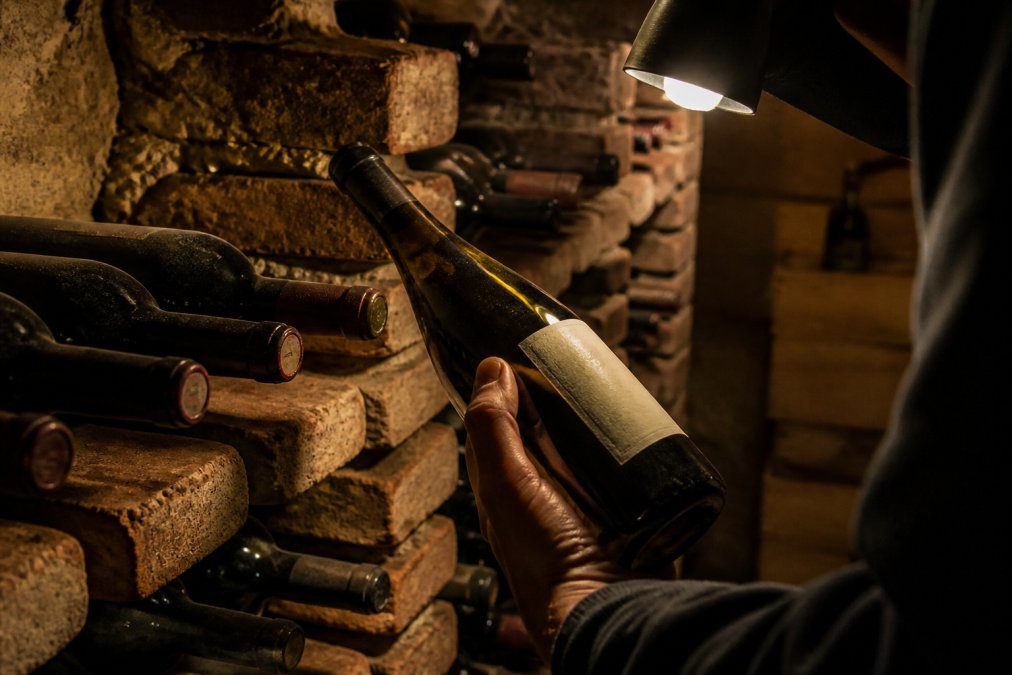
Storing Sulfite-Free Wines: A Practical Guide for the Cellar and at Home
|
Factor |
Wine with no added sulfites |
Conventional wine |
|---|---|---|
|
Ideal temperature |
12–14 °C, stable |
14–16 °C |
|
Light |
Total darkness |
Recommended: Lights Off |
|
Location |
Lying Down |
Lying Down |
|
Usage Window |
1–3 years But natural wine is a living wine, and very often |
Ages 3–10 |
|
Opening |
Consume within 1–2 days |
2–4 days |
Sensory Analysis and Wine Faults to Look For
Learn to distinguish a lively wine from a defective one. The most common defects in sulfur-free wines are oxidation (notes of ripe apple and sherry), reduction (smells of hard-boiled egg), and secondary fermentation in the bottle (unwanted perlage). A well-made natural wine has freshness, minerality, and clean fruit flavors, with no hints of mold or cellar.
Food Pairings for Wines Without Added Sulfites
Wines with no added sulfites call for simple food and clean flavors. The freshness and minerality typical of these wines pair well with dishes that don’t overpower the fruit.
- Lean cured meats and fresh, medium-aged cheeses
- Risotto with herbs, seasonal vegetables, and legumes
- Grilled lake fish and white meat
- Tomato-based dishes, as long as they aren't too spicy
Frequently Asked Questions
Is sulfite in wine harmful to your health?
For most people, the sulfites in wine do not cause any problems. Reported reactions mainly involve people with asthma or a confirmed sulfite intolerance, who may experience breathing difficulties or headaches. European regulations require this information to be included on the label precisely to protect these consumers. If you suspect you have a specific sensitivity, talk to your doctor before deciding whether to include or exclude wine from your diet.
How long does a wine without added sulfites last?
A wine with no added sulfites has a shorter shelf life than a conventional wine because it lacks the antioxidant and antibacterial effects of added sulfur dioxide. It is generally best consumed within 1–2 years of bottling, although some full-bodied wines will keep longer. Once opened, store it in the refrigerator and consume it within 2–3 days, preferably using an airtight stopper or vacuum-sealed system.
Are sulfites required in wine?
No, sulfites are not required by law. European regulations only set a maximum limit for total sulfites allowed in wine and require that they be listed on the label if the concentration exceeds 10 mg/l. A producer may choose not to add sulfur dioxide, relying instead on alternative winemaking techniques such as indigenous yeasts, temperature control, filtration, and natural winemaking practices to ensure microbiological stability.
What do sulfites do in the human body?
Ingested sulfites are metabolized primarily in the liver and kidneys and converted into sulfates, which are then excreted in the urine. In cases of sulfite intolerance, there may be a deficiency of the enzyme that metabolizes sulfites, causing symptoms such as headaches, hives, or difficulty breathing. The dose matters: small amounts are tolerated by most people, while higher doses can trigger reactions in sensitive individuals.
What is the difference between organic wine and wine with no added sulfites?
An organic wine is produced from grapes grown using organic farming methods and follows a set of guidelines that limit, but do not prohibit, the use of added sulfites. A wine with no added sulfites, on the other hand, does not involve the addition of sulfur dioxide at any stage of winemaking. The two categories may overlap, but they are not the same: a wine can be organic and contain added sulfites, or it can be free of added sulfites without organic certification.
How can you identify defects in a sulfite-free wine?
The most common defects are notes of reduction (hard-boiled egg, cooked cabbage), oxidation (ripe apple, sherry), and secondary fermentation in the bottle (undesirable effervescence). A well-made natural wine should not have flavors of mushrooms or wet rags: those notes indicate problems with microbiological stability or storage; they are not a characteristic of sulfite-free wine. If you detect them, the problem is technical, not inherent to the wine itself.
How do you store sulfite-free wine after opening it?
After opening, reseal the bottle with the original cork or an airtight stopper and store it in the refrigerator, even if it’s a red wine. The cold slows oxidation and limits bacterial growth. Drink the wine within 2–3 days to prevent oxidation. If you want to store it longer, use a vacuum-sealing system or an inert gas canister, which reduce contact with oxygen.
Are wines without added sulfites suitable even for those who aren't wine experts?
Yes. A well-made wine with no added sulfites can be appreciated even by those who aren’t sommeliers, because its fresh, mineral profile comes through with recognizable fruity and herbaceous notes. You don’t need a trained palate to appreciate its character. The important thing is to choose producers who guarantee stability and the absence of technical flaws, and to ensure it’s stored properly so you can enjoy it to the fullest.

